


Varicose veins of the lower extremities are a chronic systemic pathology that develops against the background of dysfunction of the valves that control blood flow.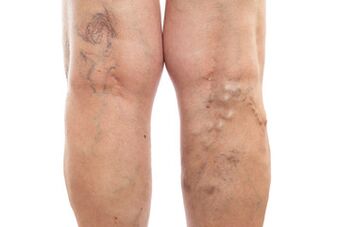 This leads to the accumulation of an excessive volume of fluid in the vessels, which gradually stretch, losing elasticity and strength.Varicose veins are characterized by the formation of large nodules under the skin of the legs, but this is not the only symptom of the disease.Patients complain of pain and heaviness in the legs, burning and itching, dryness and irritation of the skin.In advanced cases, non-healing purulent ulcers form on the skin, which are very difficult to cure due to the irreversible necrotic processes that progress in them.For the treatment of varicose veins in the legs to be effective and help prevent relapses, it is first necessary to discover their causes.
Causes of varicose veins in the legs
The tendency to develop such a serious vascular disease is often inherited and, in most cases, this pathology is inherited by women.Therefore, if there are cases of varicose veins in your family, girls and women will be at risk.
Other common causes of the disease:
- Poor nutrition.If the diet is dominated by fatty and heavy foods rich in animal fats, the risk of developing varicose veins in the lower extremities increases significantly.
- Heavy physical activity.Certain types of work, for example, cook, waiter, surgeon, office worker, hairdresser, create conditions for a gradual increase in pressure in the veins.With regular stress, blood vessels and valves become deformed;Due to the constant high pressure, the walls of the veins become thinner, brittle and varicose veins appear.
- Wear uncomfortable high-heeled shoes.These shoes reduce the amplitude of muscle contraction and compress blood vessels, which in turn contributes to impaired blood flow and the development of varicose veins.
- Sedentary lifestyle.In the absence of a minimum load on the muscles, the blood begins to stagnate in the venous bed, since the walls of the veins do not contract by themselves.Gradually, the vessels stretch, the function of the valves is disrupted and thickenings and varicose nodules form.
- Overweight.The more excess weight a person has, the greater the load on the lower limbs and, consequently, on the blood vessels.Furthermore, obese people move very little and, for the most part, eat poorly, doubling the chances of developing varicose veins in their legs.
- Pregnancy.As the fetus grows, the volume of blood in the pregnant woman's body increases, which creates an additional load on the veins.Additionally, the uterus and growing fetus compress the pelvic vessels, which impedes normal venous flow.During pregnancy, the hormone progesterone is produced in excess, which relaxes the walls of blood vessels, promoting the development of varicose veins.In most cases, varicose veins during pregnancy are reversible, therefore, after giving birth, a woman can completely get rid of the problem.
- Age.As the body ages, the walls of the veins, as well as the valves, no longer fully perform their functions, weakening.Elasticity and resistance are lost, causing the vessels to stretch.
The mechanism of development of varicose veins of the lower extremities
Varicose veins of the lower extremities develop according to a complex mechanism:
- At the initial stage, in the presence of hereditary predisposition and provoking exogenous and endogenous factors, there is a slowdown in venous blood flow.A prolonged stagnation process provokes the development of inflammatory processes in the walls and valves of the vein.
- When the valves are incompetent and the walls of the venous vessels are weak, blood begins to flow through the veins in both directions.This leads to an increase in intravenous pressure, which in turn leads to excessive stretching and deformation of the vessel walls.
- Further stagnation of blood and the progression of the inflammatory process contribute to the spread of pathology, the development of ischemia and the formation of trophic ulcers.
Gradually, the function of the affected veins becomes impaired.Varicose veins cause stagnation of blood in the vessels, which leads to local toxic lesions, as well as an increase in pressure.In advanced stages, the vessels can no longer withstand excess pressure, resulting in ruptures, which lead to profuse hemorrhages.
Symptoms
The disease is insidious because in the early stages it is practically asymptomatic.The first sign that indicates the development of varicose veins is tiredness in the legs, which is often ignored by patients and is not a reason to consult a specialist.However, as the pathology progresses, leg fatigue becomes felt more frequently, appearing mainly at night, after a day of work.Other symptoms of vascular disease:
- Pain, feeling of tightness.Such signs begin to appear from the second phase, when the pathological process begins to progress.The pain occurs mainly at night, after a day of work, and disappears in the morning.If the person ignores the discomfort and there is no treatment, the pain syndrome becomes chronic and constantly worries.
- Swollen veins and vascular network.At first, the affected veins are stronger than normal, but then they begin to swell, swell, forming knots.The vascular network is most often located on the thighs and legs.
- Cramps.A characteristic sign of varicose veins, the cause of which is stagnation of blood in the veins.Stagnation processes lead to an increase in pressure in the vessels, as a result of which the muscles begin to contract spontaneously.
In addition, vascular disease is accompanied by pronounced external changes.With the development of ischemia, patients complain of constant itching.Excessive stretching and thinning of the veins leads to the formation of bruises and bruises.In advanced stages, when atrophic processes develop, the following external symptoms appear:
- red spots on the skin;
- peeling;
- formation of dark pigmented spots;
- disappearance of hair.
If the patient develops trophic ulcers, accompanied by darkening of the extremities, this indicates the progression of irreversible necrotic processes.
Complications of varicose veins in the legs
If there is no treatment for varicose veins of the lower extremities, serious complications develop as the disease progresses, such as:
- Venous thrombosis.With this complication, pathological processes affect the deep veins.Pathology is accompanied by blockage of a vessel with a blood clot - a thrombus.The main cause of venous thrombosis is slowing of blood flow in the lower extremities.
- Pulmonary embolism.Condition in which a blood clot that breaks away from the wall of a vessel, along with the bloodstream, enters the pulmonary artery, blocking its lumen.If the blood clot is large, death occurs instantly.Smaller clots do not lead to death, but they cause complex respiratory and circulatory disorders.
- Thrombophlebitis.It is characterized by inflammation of the superficial vessel walls, accompanied by the formation of a blood clot.The disease is manifested by hyperemia, swelling along the inflamed and blocked vein, pain of varying degrees of intensity.Acute thrombophlebitis is accompanied by fever and chills, which complement the above symptoms.
- Trophic ulcers.An inevitable complication of untreated varicose veins of the lower extremities, which develops in the absence of timely treatment.Violation of tissue nutrition and the progression of the inflammatory process contribute to the compaction of subcutaneous tissue, thinning, darkening of the skin, followed by the formation of a non-healing trophic ulcer.
- Varicose eczema.It manifests itself as local redness of the skin, peeling and unbearable itching.If there is no treatment, the complication spreads quickly and leads to a deterioration in the patient's condition.
- Bleeding from varicose veins.A dangerous complication that develops against the background of rupture of varicose nodes.
Bleeding can occur due to mechanical injury, as the walls of the affected veins are very fragile and thin.Therefore, even slight friction can cause severe venous bleeding.
Diagnosis of varicose veins of the lower extremities
If you have symptoms that indicate the development of varicose veins in the lower extremities, you should make an appointment with a phlebologist who will diagnose, treat and prevent this vascular pathology.
The doctor will be able to make a preliminary diagnosis during the initial examination, during which a dense vascular network, swollen veins protruding above the surface of the skin and venous nodules are discovered in the limbs.To confirm the diagnosis, referral for additional tests is made, including the following procedures:
- Doppler ultrasound;
- duplex ultrasound angioscanning;
- radionuclide and radiopaque phleboscintigraphy;
- phlebomanometry;
- plethysmography;
- photoplethysmography.
Treatment of varicose veins in the legs
If the disease is diagnosed in the early stages, when there are no serious complications, conservative therapy is prescribed, the main goals of which are:
- eliminate stagnant processes;
- normalize pressure in the veins;
- restore blood circulation;
- eliminate pathological symptoms.
For these purposes, medicines from the following groups are used:
- Venotonics and phlebotonics.Helps improve blood vessel health, normalize blood circulation and improve lymphatic flow.
- Anticoagulants.Used to reduce blood viscosity and prevent blood clots.
- Nonsteroidal anti-inflammatory drugs.They have a pronounced anti-inflammatory effect and relieve pain.
- Antiplatelet agents.Reduce the risk of thrombosis and improve tissue trophism.
If drug treatment is ineffective and the disease progresses, the doctor discusses surgical treatment options with the patient.Surgical methods for treating varicose veins include:
- Sclerotherapy.Introduction into the lumen of the affected vein of a sclerosing drug, which glues the vessel, as a result of which it resolves on its own, being replaced by connective tissue.
- Laser coagulation.Indicated in cases where the diameter of the affected veins does not exceed 10 mm.The laser beams create a sclerotic effect on the vessel, as a result of which it resolves on its own.
- Phlebectomy.Surgical intervention during which the surgeon excises deformed areas of blood vessels, carrying out all necessary manipulations through microscopic punctures in the skin.
Contraindications
For varicose veins in the legs, any actions that contribute to the development of stagnation in the vessels of the lower extremities are contraindicated:
- long stay in static positions;
- intense physical activity, lifting heavy weights;
- sitting with legs bent or crossed;
- wearing tight, uncomfortable shoes.
It is also necessary to get rid of bad habits such as smoking and alcohol abuse.Tobacco smoke and alcohol negatively affect the health of the entire body, making the veins fragile, thin and inelastic, which soon leads to the development of varicose veins and other cardiovascular diseases.
Cost of treating varicose veins of the lower extremities
The cost of treating varicose veins in the legs is influenced by the following factors:
- the stage at which the disease was diagnosed;
- associated complications;
- individually selected method of therapy - conservative or surgical;
- the need for additional therapeutic techniques, such as physiotherapy.